


Let’s be honest for a second. When most of us hear “space economy,” we still picture NASA mission control, grainy moon footage, and maybe a billionaire shooting himself into the stratosphere. But the reality? It’s way more grounded—pun intended. The space economy is projected to hit $1.8 trillion by 2035, according to McKinsey. That’s not just rockets. That’s satellite internet, Earth observation, space tourism, in-orbit manufacturing, and even asteroid mining (yes, really).
So, how does a regular person—someone who isn’t an accredited angel investor with a spare $10 million—get a slice of that cosmic pie? Well, you’ve got two main lanes: space economy ETFs and private launch startups. Both are exciting. Both are risky. But they’re about as different as a cruise ship and a speedboat. Let’s break it down.
First, Why Space Now? The Timing Isn’t Accidental
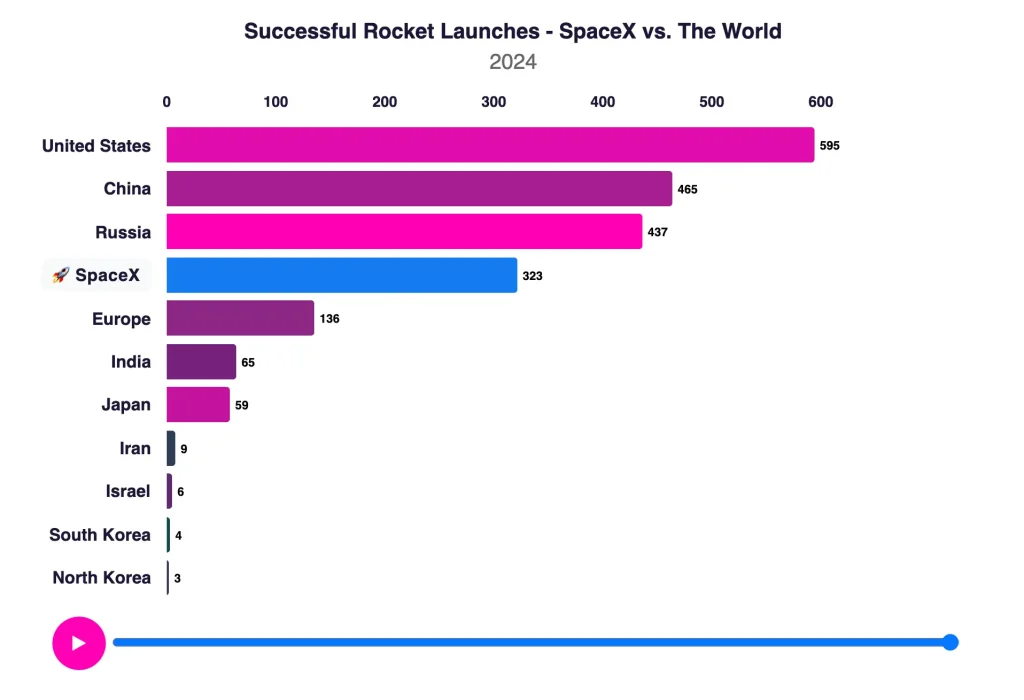
You might wonder, “Why is everyone suddenly talking about space stocks?” Well, a few things converged. Launch costs have plummeted by 95% since the Space Shuttle era. Reusable rockets—thanks to SpaceX and Rocket Lab—turned what used to be a $200 million single-use firework into a $30 million repeatable bus ride. That shift changed the entire economics of the industry.
Add in the growing demand for low-Earth orbit (LEO) connectivity. Starlink has over 4 million subscribers now. Amazon’s Project Kuiper is scrambling to catch up. And governments? They’re pouring billions into space defense and climate monitoring. So, the infrastructure is there. The demand is there. The only question is—how do you play it?
Lane One: Space Economy ETFs (The “Set It and Forget It” Route)
If you’ve ever bought an S&P 500 index fund, you already understand the appeal of ETFs. They give you instant diversification. You’re not betting on one company; you’re betting on a whole sector. Space ETFs do exactly that, but with a cosmic tilt.
Here’s the deal—there are a few main players in this space (again, pun intended). The ARK Space Exploration & Innovation ETF (ARKX) is probably the most famous. It’s actively managed by Cathie Wood’s team, which means they pick and choose. But it’s not purely rockets—they hold companies like 3D printing firms and even agricultural tech that uses satellite data. A bit quirky, honestly.
Then you have the ProcureAM Space ETF (UFO). Yes, the ticker is UFO. It tracks companies that generate at least 50% of revenue from space-related activities. That’s a stricter definition, so you’ll see names like Iridium Communications and EchoStar here. And there’s the SPDR S&P Aerospace & Defense ETF (XAR)—though that’s more defense-heavy, it catches some space tailwinds.
What’s Inside a Typical Space ETF?
Don’t expect a portfolio full of pure-play launch companies. Most of these ETFs are a mix of:
- Satellite operators (like SES or Eutelsat)
- Defense contractors (Lockheed Martin, Northrop Grumman)
- Semiconductor makers (because satellites need chips)
- Telecom giants (like Verizon, who use space infrastructure)
- A handful of pure-play launchers (Rocket Lab, for example)
That’s actually a good thing. Space is volatile. One failed launch can wipe 20% off a single stock. But an ETF? It just shrugs. The downside is you won’t see explosive 300% gains either. It’s a slow burn, not a moonshot.
Lane Two: Private Launch Startups (The High-Stakes, High-Reward Path)
Now, if ETFs are the cruise ship—steady, comfortable, with a buffet—then private launch startups are the speedboat. Fast, thrilling, and you might get thrown overboard. But if you hold on? The returns can be astronomical.
Private companies like SpaceX, Blue Origin, and Relativity Space are not publicly traded. You can’t just open your Robinhood app and buy shares. To get in, you typically need to be an accredited investor—meaning you earn over $200k a year or have a net worth exceeding $1 million (excluding your primary residence). That alone filters out most retail investors.
But wait—there are backdoors. Special Purpose Acquisition Companies (SPACs) have been the go-to route for space startups to go public. Rocket Lab went public via a SPAC in 2021. So did Virgin Galactic. And while SPACs have a tarnished reputation (many crashed post-merger), some solid companies emerged from the wreckage.
How to Get Exposure Without Being a Millionaire
Okay, so you’re not accredited. You still want a piece of SpaceX? Here are a few workarounds:
- Invest in SpaceX’s suppliers. Companies like Aerojet Rocketdyne (now part of L3Harris) or Maxar Technologies feed into SpaceX’s supply chain. Not pure play, but adjacent.
- Look at funds that hold pre-IPO shares. Some venture capital funds—like ARK Venture Fund (ARKVX)—allow non-accredited investors to access private companies. ARKVX holds a small position in SpaceX. It’s not much, but it’s a foot in the door.
- Wait for the IPO. SpaceX has talked about spinning off Starlink for years. If that happens, it could be one of the largest public offerings ever. Keep your cash ready.
Honestly, the last option might be your best bet. Rumors suggest a Starlink IPO could value the division at over $100 billion. But remember—timelines in space are always “two years away.” Always.
Comparing the Two: A Quick Reality Check
Let’s put them side by side. Not to say one is better—they serve different purposes.
| Aspect | Space ETFs | Private Launch Startups |
|---|---|---|
| Liquidity | High (trade like stocks) | Very low (lock-up periods) |
| Minimum investment | As low as $50 | Often $100k+ (or via funds) |
| Risk level | Moderate | Extreme |
| Potential upside | Steady 10-15% annually (if sector grows) | 10x or 100x… or total loss |
| Diversification | Built-in | None—you’re betting on one horse |
| Time horizon | 3-5 years minimum | 5-10 years minimum |
See the tradeoff? ETFs are for building wealth. Private startups are for building a legacy—or losing it all. There’s no middle ground.
The Hidden Gems: Mid-Cap and Small-Cap Space Stocks
Between the ETF safety net and the private startup gamble, there’s a third lane that most people ignore. I’m talking about small and mid-cap public companies that are essentially pure-play space but haven’t blown up yet. Names like Rocket Lab (RKLB), Intuitive Machines (LUNR), and Planet Labs (PL).
Rocket Lab, in particular, is fascinating. They’re the second-most successful orbital launcher in the US, behind SpaceX. Their Electron rocket is small but reliable. And they’re building a bigger rocket called Neutron. Their stock has been volatile—it swung from $20 to $4 and back to $20 again over three years. But if you have the stomach for that ride, the long-term thesis is solid.
Intuitive Machines? They made history by landing the first private spacecraft on the Moon in 2024. Sure, it tipped over on its side, but it landed! That kind of first-mover advantage can compound over time, especially with NASA contracts flowing in.
What About the Risks? No Sugarcoating
I’d be lying if I said this was easy money. Space is hard. Rockets explode. Contracts get cancelled. And valuations? They’re often based on future projections that assume everything goes perfectly. Newsflash: it never does.
Remember the Iridium satellite constellation? It went bankrupt in 1999 after launching 66 satellites. The company had to be restructured from scratch. And more recently, Virgin Orbit—Richard Branson’s launch startup—filed for Chapter 11 in 2023. They had a successful launch just two years prior. That’s how fast things can turn.
That’s why diversification matters. Even if you’re bullish on space, don’t put more than 5-10% of your portfolio into it. Treat it like a venture capital allocation, not a core holding.
A Few Practical Tips Before You Hit “Buy”
Alright, let’s wrap this up with some actionable advice. Not financial advice—I’m not your advisor—but common sense.
- Start with an ETF. If you’re new, buy a small position in ARKX or UFO. Get comfortable with the volatility.
- Dollar-cost average. Don’t lump-sum into space. The sector swings wildly. Invest a fixed amount monthly instead.
- Watch the launch calendar. When a big mission fails, stocks dip. That’s often a buying opportunity—if you believe in the long-term.
- Read the quarterly earnings. Space companies are notorious for burning cash. Check their runway. If they only have 6 months of cash left, that’s a red flag.
- Don’t chase hype. When a company announces a Mars mission, the stock spikes. Wait for the pullback. It always comes.
And here’s a thought that might stick with you—space investing isn’t really about rockets. It’s about infrastructure. Roads, ports, and railways drove the last two centuries of economic growth. Satellites and orbital logistics will drive this one. The question isn’t whether space will be profitable. It’s whether you have the patience to wait for it.


More Stories
Investment Lessons From the World’s Fastest-Growing Economies
Passive Income Through Royalty Streaming Investments: Your Money, Making Music (and More)
Generational Wealth Transfer Through Direct Indexing of Family Values